Knowledge
Weight loss is more than willpower.
Metabolic health, hormones, stress, and weight stigma can all impact the relationship people have with food and their bodies.
Obesity is a complex condition, not a character flaw.
There is more to the story than diet and exercise.
UNDERSTANDING THE JOURNEY
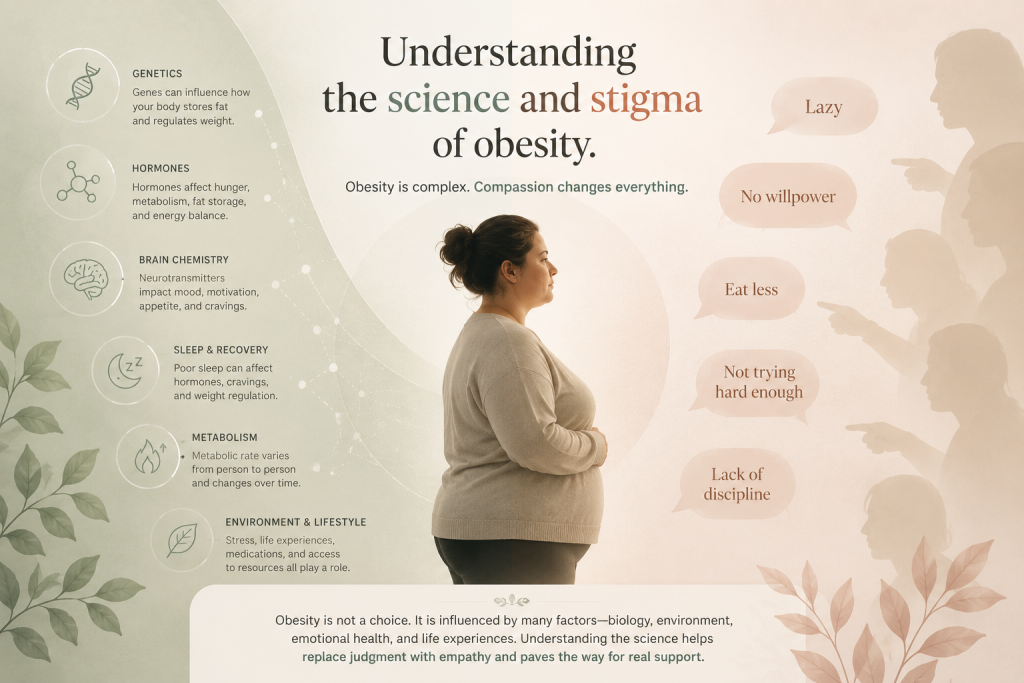
Understanding the science and stigma of obesity.
Weight is influenced by many interconnected factors, including metabolism, emotional health, stress, hormones, and genetics. Education can help individuals better understand the complexity of obesity and challenge harmful misconceptions.
What Can You Expect to Learn?
Weight is shaped by far more than willpower. Metabolic rate, hormones, insulin resistance, stress, genetics, and emotional health all play a role — and when these systems are out of balance, weight loss becomes more complicated than most people realize.
In our work together, I help you understand the science behind your experience, challenge harmful beliefs about obesity, and replace shame with clarity. Because when you understand what’s actually happening in your body and your story, healing becomes possible in a way it never was before.
Insulin Resistance Explained

Knowledge can guide the process. Self-understanding helps sustain it.
Body weight is influenced by many interconnected factors, not just willpower or food choices.
How your body converts energy can influence weight changes, energy levels, and overall balance.
Hormones play an important role in appetite, cravings, energy regulation, and body composition.
Blood sugar regulation can impact hunger, fat storage, metabolism, and long-term wellness.
Stress, anxiety, depression, and emotional experiences may influence eating behaviors and motivation.
Chronic stress can affect sleep, appetite, inflammation, and the body’s ability to maintain balance.
Genetics may influence metabolism, hunger signals, body composition, and weight-related health patterns..
Poor sleep can affect hormones, cravings, mood, and overall health regulation.
Daily routines, movement, nutrition, and coping strategies all contribute to long-term wellness.
Frequently Asked Questions
Why is weight loss sometimes more complicated than “eat less and exercise more”?
Because your body is far more complex than a simple equation. Weight is influenced by an interconnected web of factors — metabolism, hormones, stress, sleep, emotional health, genetics, and lifestyle habits — all working together to regulate how your body manages hunger, energy, and weight over time. When these systems are out of balance, no amount of discipline or restriction can fully compensate. Your struggle is not a character flaw. It’s biology.
Can stress affect weight gain or weight loss?
Yes — and this connection is more significant than most people realize. Chronic stress affects cortisol levels, appetite, sleep quality, and emotional eating patterns, all of which play a direct role in how your body manages weight. When stress becomes the norm rather than the exception, your body responds in ways that make weight regulation genuinely harder — regardless of what you eat or how much you exercise.
Can counseling help support long-term lifestyle changes?
Yes — and this is where counseling shines. Diets and programs can tell you what to do. Counseling helps you understand why you do what you do — and that understanding changes everything. Together we’ll explore emotional triggers, coping patterns, self-image, stress responses, and the behavioral shifts that support genuine long term wellness. Not a quick fix. A real foundation.
Why is emotional health important during a weight loss journey?
Because lasting change starts from the inside. Emotional health influences motivation, self-esteem, how you cope with stress, your relationship with food, and the daily habits that either support or undermine your progress. When your emotional wellbeing is supported, everything else becomes more sustainable — not perfect, but genuinely sustainable.